Skip to Content
Skip to solutions
Odoo, integrations, and custom software

Business software should
make work easier.

We sit down with your team, learn where things get stuck, and fix it. Sometimes that means setting up Odoo properly. Sometimes it means building the missing piece. Usually, it is a thoughtful mix of both.

Standard Odoo when it works Custom code when it earns its keep A system your team can own
A TYPICAL FIRST CONVERSATION “Here is the part that drives us crazy.”
“We approve quotes in email, then enter the same information again.”
“Customers call us because they cannot see what is happening.”
“This report takes half a day and nobody quite trusts it.”

We are a good fit when the software is technically working, but the people using it are still doing too much by hand.

Odoo may be part of the answer. It does not have to be the whole answer.

The usual clues

Your team already knows where the problem is.

01 “We export it, fix it in Excel, then put it back.”
02 “Ask Maria. She is the only one who knows.”
03 “Odoo gets us most of the way there.”
04 “We spend all day answering status questions.”
What we help with

You do not have to fit your problem into a service menu.

Bring us the messy version. We will work out what belongs in standard Odoo, what needs connecting, and what is genuinely worth building.

Set up Odoo without losing sight of the business

We help make the calls that matter: what to keep standard, what data to move, how the workflow should feel, and how to launch without surprising the people who have to use it.

Talk through your Odoo plans
Build the part that is actually missing

A focused Odoo module, an internal tool, or a small product of its own. We keep the scope understandable and the code maintainable.

Tell us what the standard system cannot do

Connect the systems people are babysitting

Good integration work is quiet. Information arrives where it should, failures are visible, and nobody has to copy the same record into three places.

See a few examples

Give people a better way into the business

Customer and vendor portals, dashboards, document flows, and simple screens for jobs that should not require a manual or a training seminar.

Show us who needs a better experience
A note from Toro

We are not interested in custom code for its own sake.

If standard Odoo solves the problem, we use it.

If it does not, we talk to the people doing the work and figure out why before we build anything. That usually saves time, cuts out unnecessary features, and leaves everyone with a system they can explain.

What working together looks like

Less theatre. More useful conversations.

1

Show us the messy part

A spreadsheet, a screen recording, the email thread everyone hates. You do not need to clean it up first.

2

Make the problem concrete

We trace who does what, where the information comes from, and what happens when the normal path breaks.

3

Put something real in people’s hands

We test with the people who will use it, fix what we got wrong, and ship in sensible pieces.

A few places we can help

Real problems are rarely tidy. That is fine.

The shape changes from company to company. These are the kinds of conversations that often turn into useful work.

SALES

Pricing and approvals that keep leaving Odoo

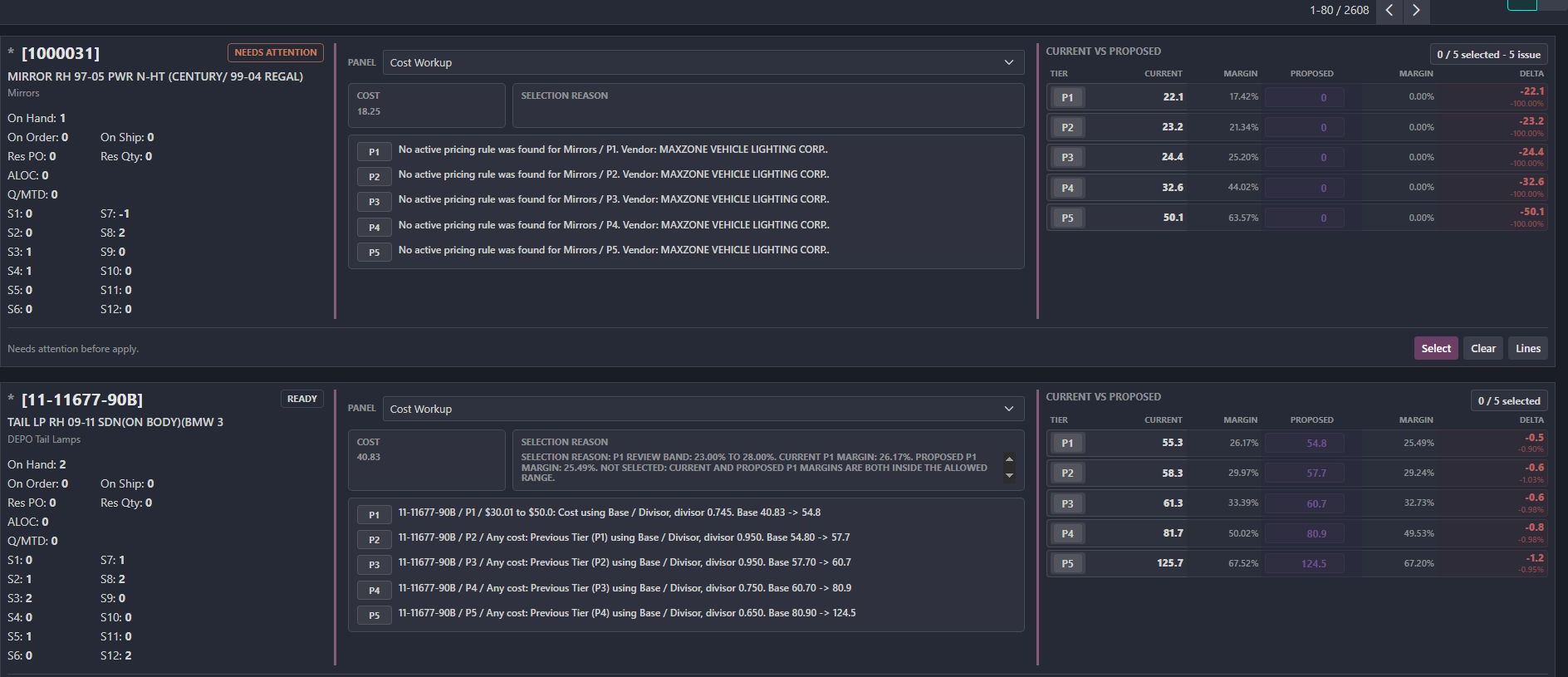
The quote may start in CRM, but the important decisions happen in email, spreadsheets, and somebody's memory. We can bring the rules, exceptions, and delivery promises into one flow without turning every quote into a project.

For example: guided pricing, sensible approvals, promised dates, and clean handoff to delivery and billing.

PORTALS

A customer portal people will actually use

Give customers a clear place to check status, find documents, approve work, and ask for help—without exposing the back office.

Useful beats impressive. The right information and the right next action are usually enough.

SERVICE

One place to run the work

Requests, schedules, project notes, documents, and customer updates tend to drift apart. A focused workspace can put the team back on the same page.

This might live in Odoo Projects, Field Service, Helpdesk, or a simpler screen made for the job.

FINANCE

Approvals with a memory

Important decisions should not disappear into inboxes. We can give people the evidence they need, route unusual cases to the right person, and leave a clear history without making routine work harder.

Good controls feel proportionate: quick for normal work, careful when the risk is real.

INTEGRATIONS

Connections nobody has to babysit

APIs, marketplaces, payment providers, document systems, hardware, and older software all have their own quirks. We build the connection around the real workflow, make failures visible, and give the team a sane way to recover.

The goal is not simply to move data. It is to help the next person do the right thing with it.

SOMETHING WE HAVE BUILT Collaborative Scanning

Warehouse teams should not have to take turns on one transfer. We built an Odoo 19 module that lets several people scan together, keeps a clear audit trail, handles lost connections safely, and falls back to standard Odoo when needed. It is a warehouse product, but the thinking behind it—shared work, permissions, recovery, and understandable failure states—applies well beyond the warehouse.

Where we look first

The handoffs are usually where things break.

We look beyond the app list. The useful questions are about what one person promised, what the next person can see, and who knows when something has gone wrong.

Tell us where work gets stuck

Sales made a promise. Can delivery see it?

The work is done. Does billing know?

Something went wrong. Who owns the next move?

A customer wants an answer. Can they find it themselves?

Those are software questions, process questions, and people questions. The fix has to respect all three.
How to start

Start with the complaint you hear every week.

You do not need a transformation program or a finished specification. A concrete frustration is enough.

A closer look

“We know this is a problem. We are not sure what to change.”

We will look at the real workflow with your team, make the tradeoffs visible, and give you a practical next move.

A short, useful piece of work.
A focused build

“We need this one part to work much better.”

A portal, module, automation, integration, or end-to-end workflow can be small enough to understand and important enough to make a difference.

Designed with users. Shipped in sensible pieces.
An ongoing partnership

“Odoo is becoming the way we run the company. We want a thoughtful technical partner.”

We can stay close as the system grows: shaping priorities, protecting the architecture, building the unusual parts, and helping the team get more from what is already there.

Steady judgment without the big-transformation theatre.
What you should expect

We would rather leave you capable than dependent.

Your team should understand what changed, why it changed, and what to do when the unusual case shows up.

Talk to the people using it

The cleanest process map in the room is not much use if it ignores the person doing the work at 4:45 on a Friday.

Keep the unusual parts explainable

Custom code should have a clear job. We keep its boundaries visible and leave the reasoning behind it.

Test what happens when things go wrong

Permissions, bad data, missed steps, lost connections, and integrations that fail are part of the real product.

Leave the system in your hands

Maintainable code, familiar Odoo paths, useful documentation, and clear handoffs keep your company in control.

A few honest answers

Things worth asking before we work together.

If your question is not here, send it over. We will give you a straight answer.

What kinds of companies are the best fit?

Usually, it is a growing company where important work is spread across Odoo, spreadsheets, inboxes, and a few disconnected tools. We are most useful when the problem crosses team boundaries and cannot be fixed with one checkbox.

Is Toro only an Odoo company?

No. Odoo is an important part of our work, but the business problem comes first. We also build portals, integrations, automations, and focused tools around it when that makes the system simpler.

Can we start with one specific problem?

Yes—and that is often the best way to begin. A focused bottleneck gives us something concrete to understand, test, and improve before anyone commits to a much larger project.

What can you build beyond warehouse workflows?

Sales and approval flows, customer or vendor portals, project and service workspaces, finance controls, document processes, dashboards, integrations, and other focused business tools. Collaborative Scanning is one thing we have built, not the limit of what we can build.

How do you keep custom work maintainable?

We keep standard Odoo paths where they make sense, give custom modules clear boundaries, test realistic failure cases, and document the decisions that will matter later. We also try hard not to build things you do not need.

Do we need a finished specification before reaching out?

No. Bring the workaround, the screen recording, the spreadsheet, or the plain-English version of what is going wrong. Understanding the real process comes before deciding what should be configured or built.

You can start small

Tell us the part everyone complains about.

An ugly spreadsheet. A report nobody trusts. A portal people avoid. A half-working Odoo flow. Send us the real version.

You do not need a specification. A screen recording, a spreadsheet, or a plain-English explanation is enough.