The business problem
New costs can affect several customer price tiers at once. A spreadsheet handoff makes it harder to see the current price, proposed price, stock, and sales context together.
The work replaces an export, macro and upload cycle with configurable rules and a review workspace. It supports cost bands, dependent price tiers, individual exceptions and deliberate application.
See the real screens ↓Explore 1 real view of this workflow. Select a task, show every screen, or enlarge an image to read the original controls.
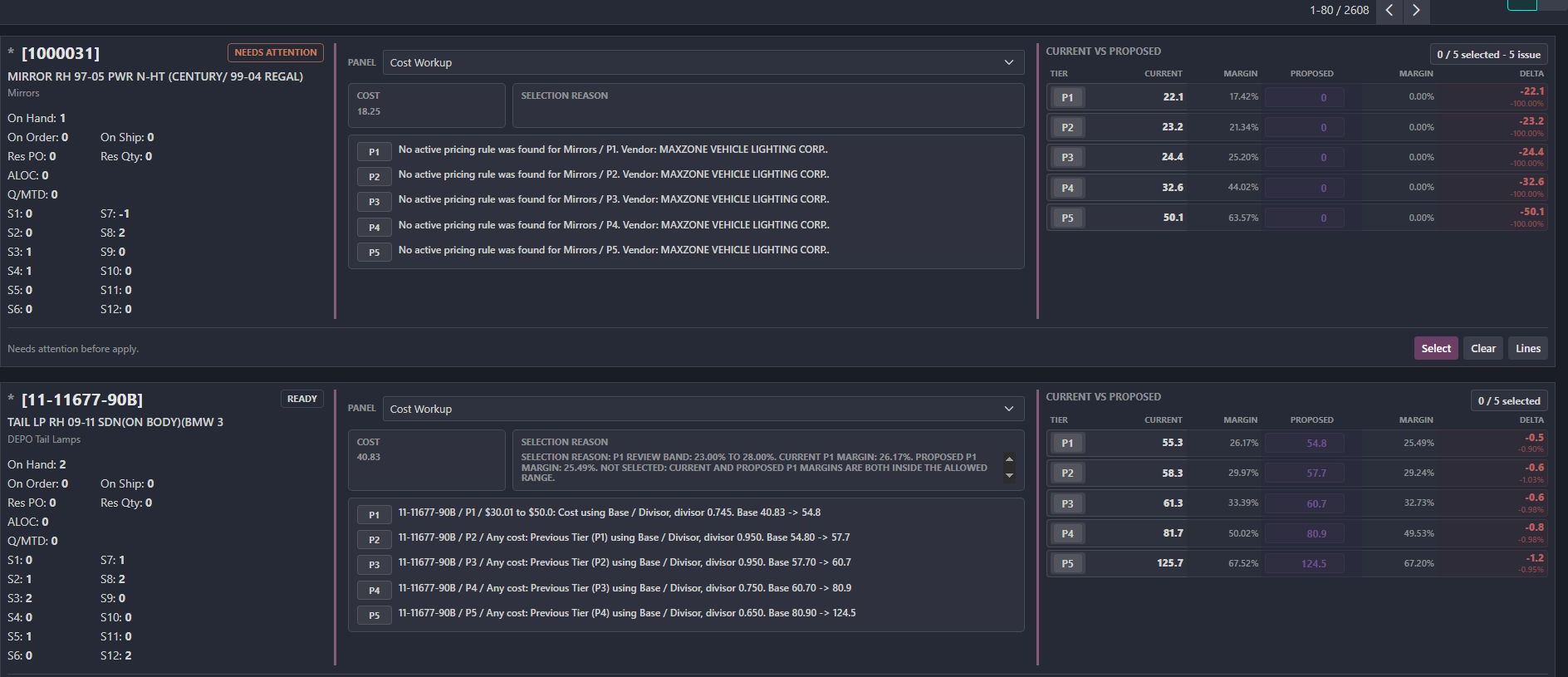
Actual Pro-A-Motors interface captures. Private identities and contact details are covered or outside the crop; screen data has not been replaced.
New costs can affect several customer price tiers at once. A spreadsheet handoff makes it harder to see the current price, proposed price, stock, and sales context together.
Current and proposed tiers now sit beside stock, sales activity and rule explanations. Reviewers select the changes to apply.
The buyer can inspect the cost-to-price decision before selected changes reach the pricelist.
The catalog shows one mirror needing attention and a tail lamp marked Ready. Both still have zero selected tiers in the captured review.
The mirror’s rule messages say no active pricing rule was found. The lamp’s selection explanation says its current and proposed P1 margins are both inside the allowed review band.
Resolve missing rules where needed and choose which eligible tiers should change. A calculated proposal is not an instruction to apply every price.
The pricing operator retains the reviewed selection and the reasoning behind the remaining work.
The work replaces an export, macro and upload cycle with configurable rules and a review workspace. It supports cost bands, dependent price tiers, individual exceptions and deliberate application.
Select eligible containers under receipt and landed-cost readiness rules, with kit parents excluded by default.
The next handoff The review has an explicit, eligible product scope.
Use product, category or fallback rules and cost bands to generate proposed tier prices.
The next handoff The reviewer can inspect the rule behind the proposal.
Edit the proposed tier and recalculate later tiers that depend on it.
The next handoff Dependent proposals stay connected to the reviewer’s change.
Compare current and proposed margins, resolve missing rules and apply the selected lines.
The next handoff Sales receives the selected changes while unresolved work remains reviewable.
These paths describe the implemented workflow. The captures show specific existing records; they do not demonstrate every branch being executed.
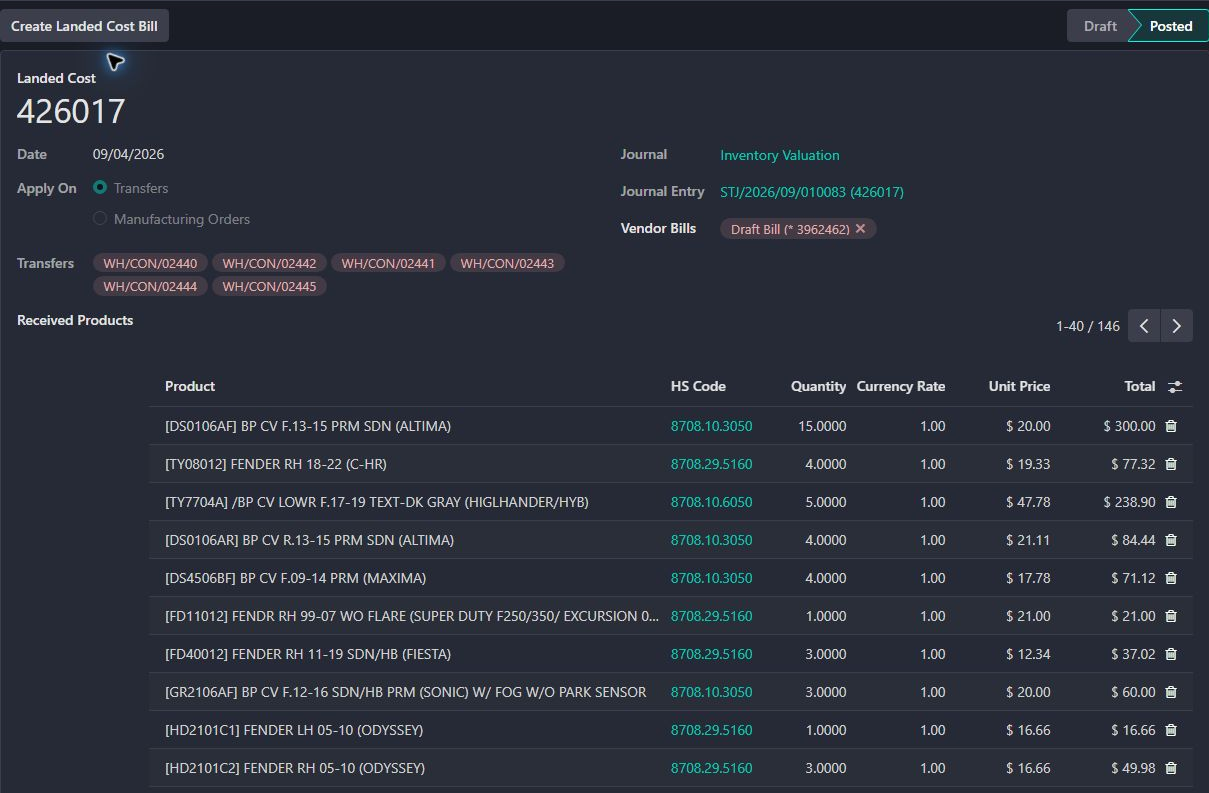
Inspect the posted import-cost allocation upstream of the price decision.
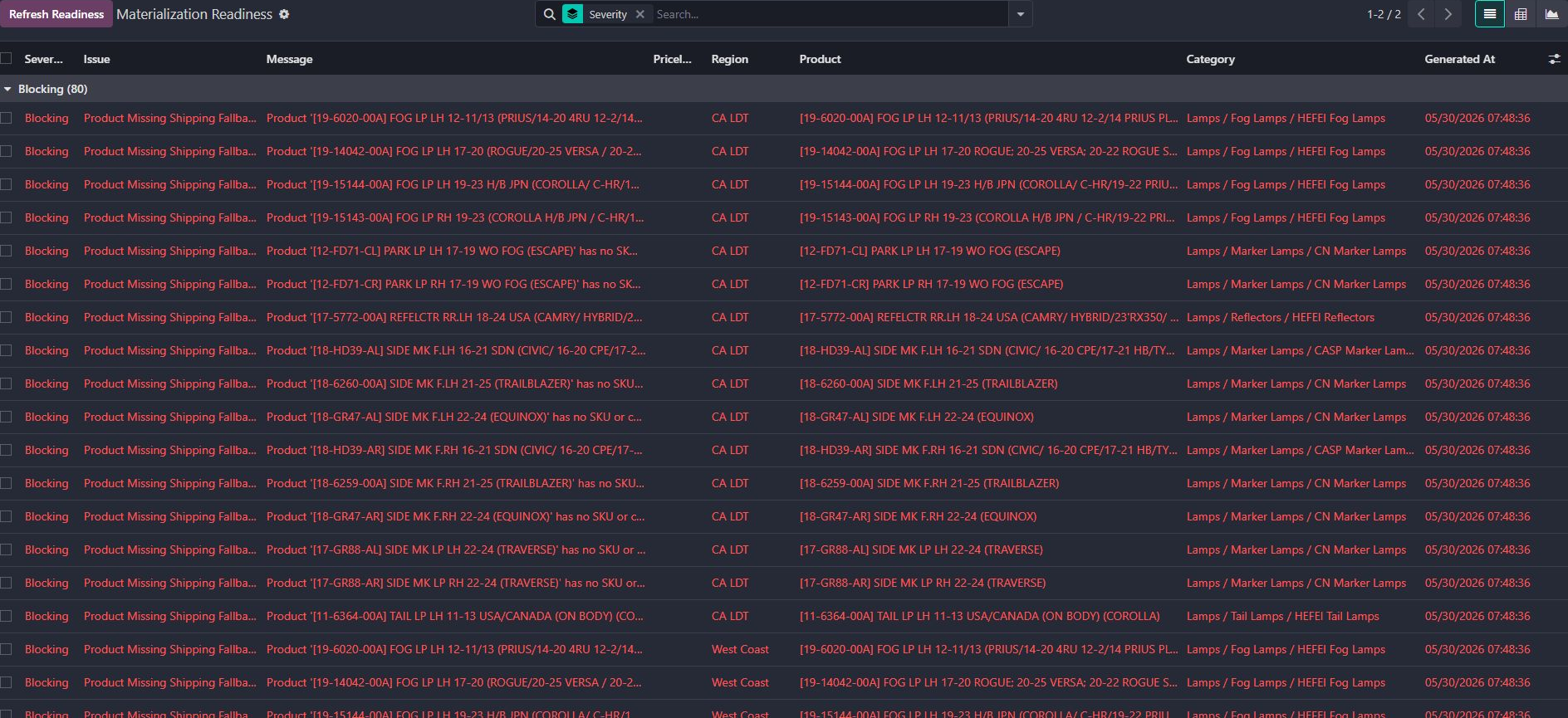
See the shipping-cost inputs needed for region-specific pricing.
Choose eligible containers or a manual product selection. Configured rules generate the proposed tier prices.
Review prices and margins alongside stock and sales activity. Adjust proposals where the business needs an exception.
Select the changes that are ready. Apply those lines from the review instead of re-uploading an entire workbook.
A product without an eligible pricing rule stays distinguishable from a usable proposal.
Container readiness, product eligibility and kit exclusions affect which products belong in a review.
Review bands can leave a valid proposal unselected. Apply Selected operates on the reviewed selection.
Existing records are shown as captured. Private identities are covered or outside the crop. No business records were changed for this collection. Implementation history supports behavior beyond the visible screen; a still image is not an end-to-end test or a measured productivity result.
A custom Pro-A-Motors review workflow built on Odoo pricelists, stock and landed costs, with the Captivea container foundation and Pro-A-Motors extensions.
Keeps price-change exceptions visible for review before the next commercial decision.
Gives sales a reviewed pricing context when a price needs attention.