The business problem
The physical shipment and its financial consequences were spread across different documents. This view was created to give the inbound process one traceable operating reference.
The shipment becomes a shared reference for receiving, backorders, supplier costs and price review. Each stage answers a different question before the next team relies on its result.
See the real screens ↓Explore 3 real views of this workflow. Select a task, show every screen, or enlarge an image to read the original controls.
Actual Pro-A-Motors interface captures. Private identities and contact details are covered or outside the crop; screen data has not been replaced.
The physical shipment and its financial consequences were spread across different documents. This view was created to give the inbound process one traceable operating reference.
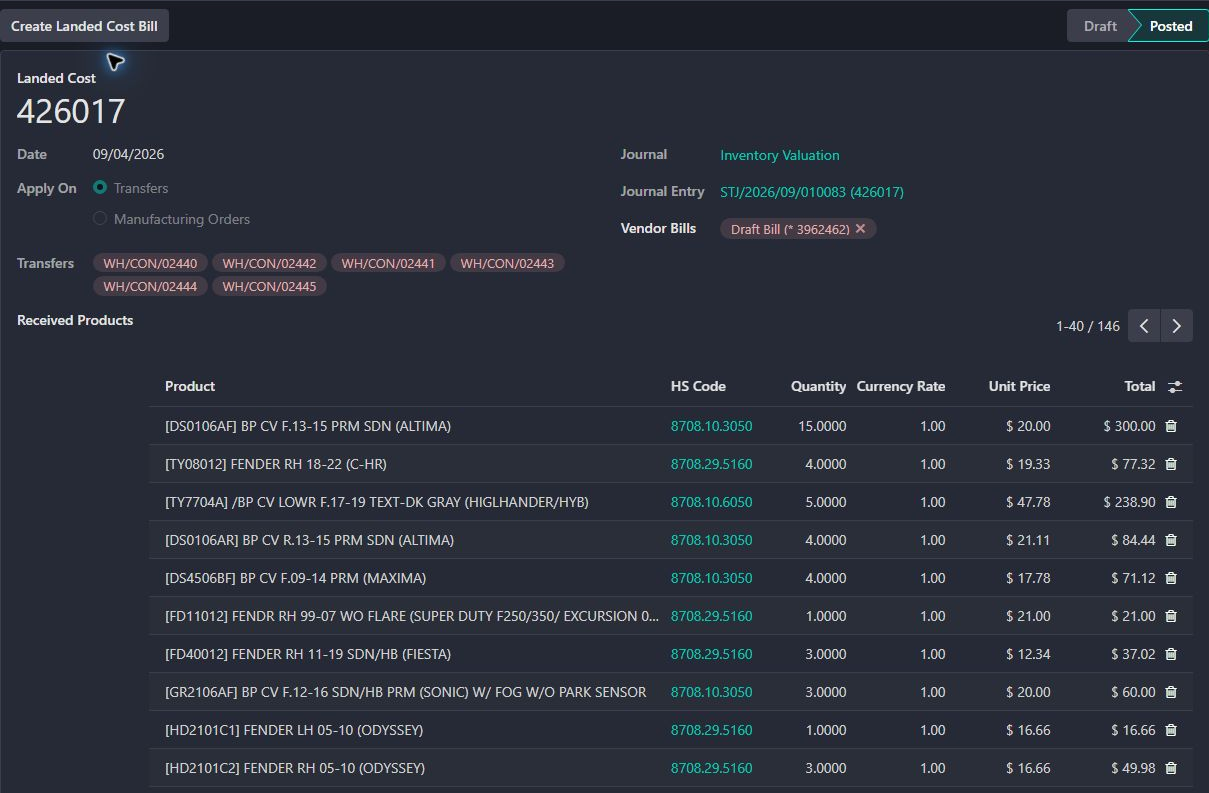
Received products connect to a posted cost record, charge-specific allocation methods and each product’s additional landed cost.
Operations and finance share a clearer path from supplier shipment through receipt, exceptions, cost formation, and product-price review.
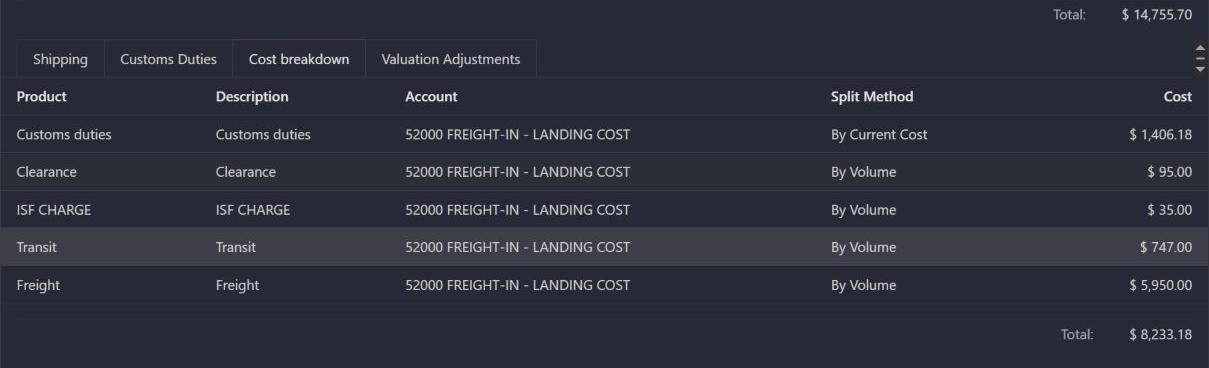
The posted cost includes $5,950 in freight and $1,406.18 in customs duties, plus clearance, ISF and transit.
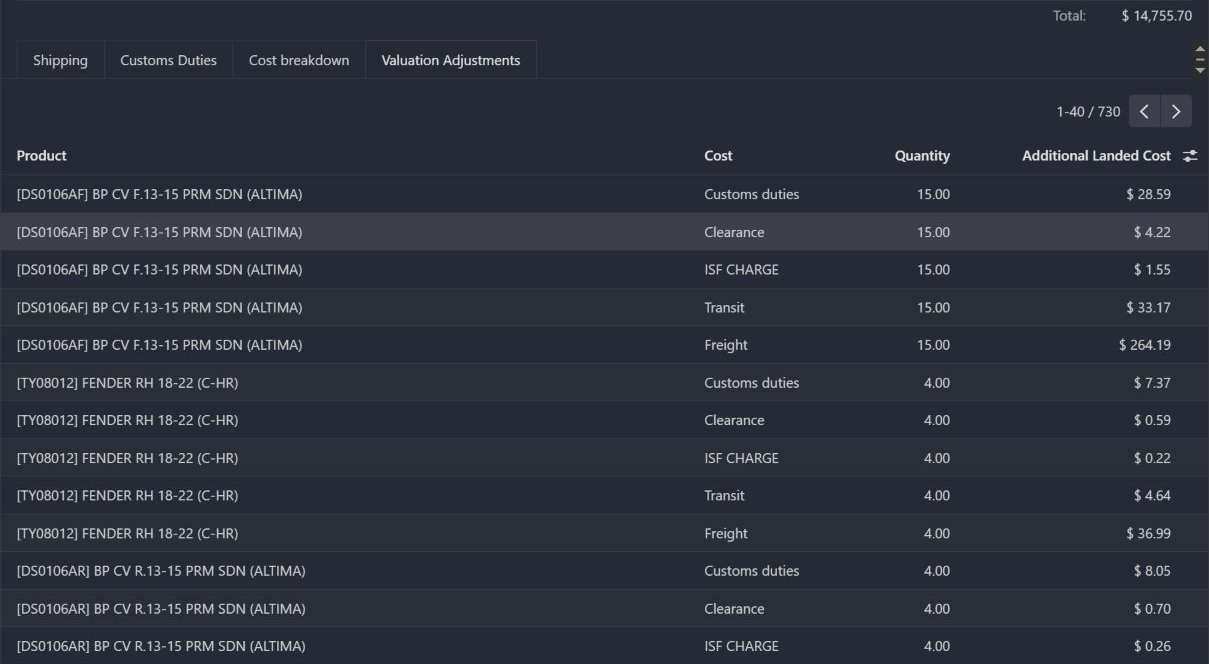
Freight is split by volume; customs duties are split by current cost. The allocation tab shows the resulting charge for each product.
Inspect the allocation method and trace an item before relying on its landed cost.
Purchasing and finance retain the same reference from the received product to its share of import costs.
The shipment becomes a shared reference for receiving, backorders, supplier costs and price review. Each stage answers a different question before the next team relies on its result.
Review scanned versus expected quantities and preserve the remainder on a linked backorder.
The next handoff Receiving can close the arrived quantity without losing the shortage.
Separate freight, transit, clearance and duties, and inspect the split method for each.
The next handoff Finance can explain how the charge reaches the product.
Trace its quantity and additional landed-cost lines back to the posted record.
The next handoff The buyer gets a cost with an inspectable origin.
Respect container cost-readiness rules before creating a price review.
The next handoff Pricing receives eligible products with the current cost context.
These paths describe the implemented workflow. The captures show specific existing records; they do not demonstrate every branch being executed.
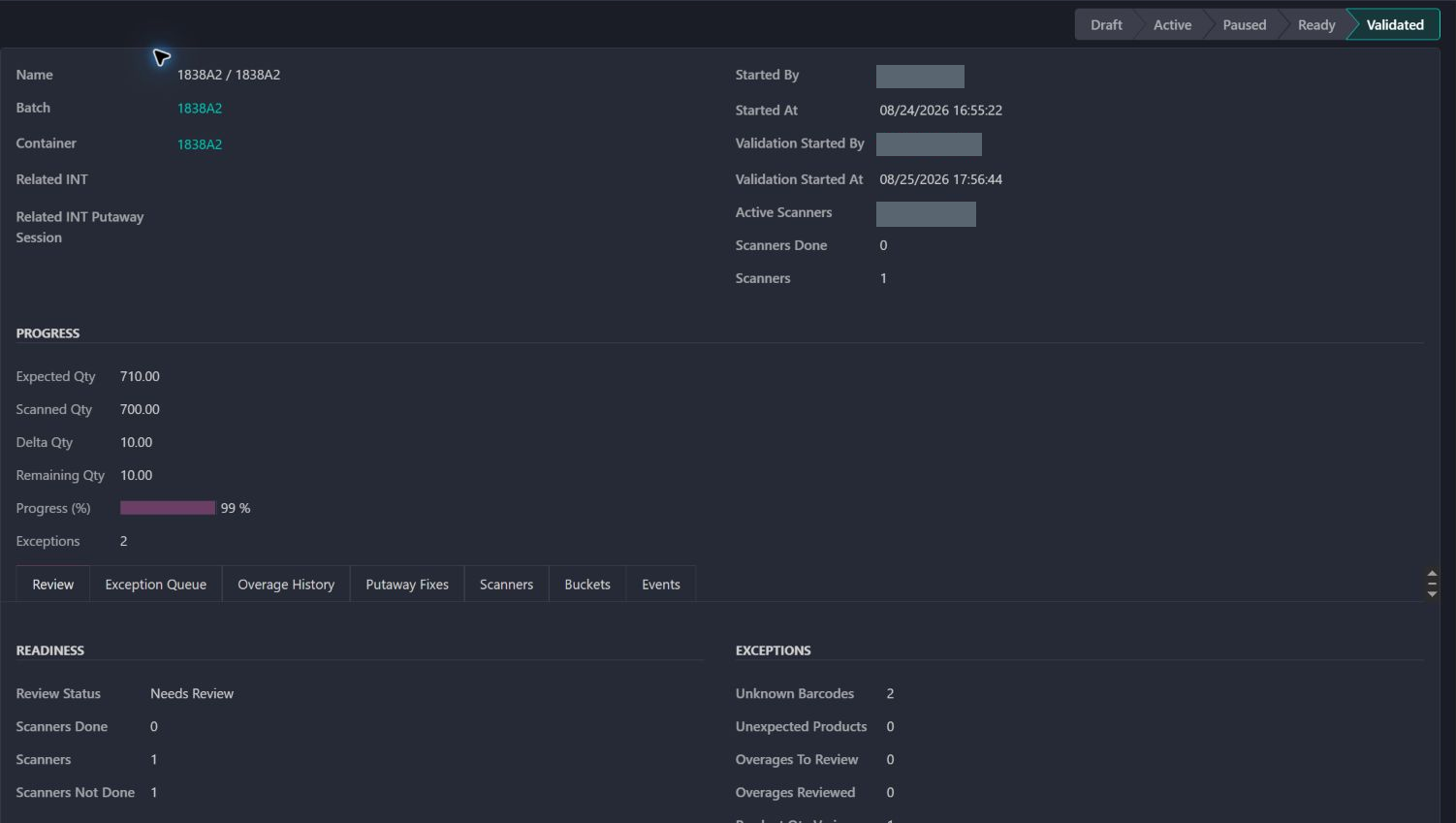
Follow an actual receiving review, completed receipt and remaining backorder.
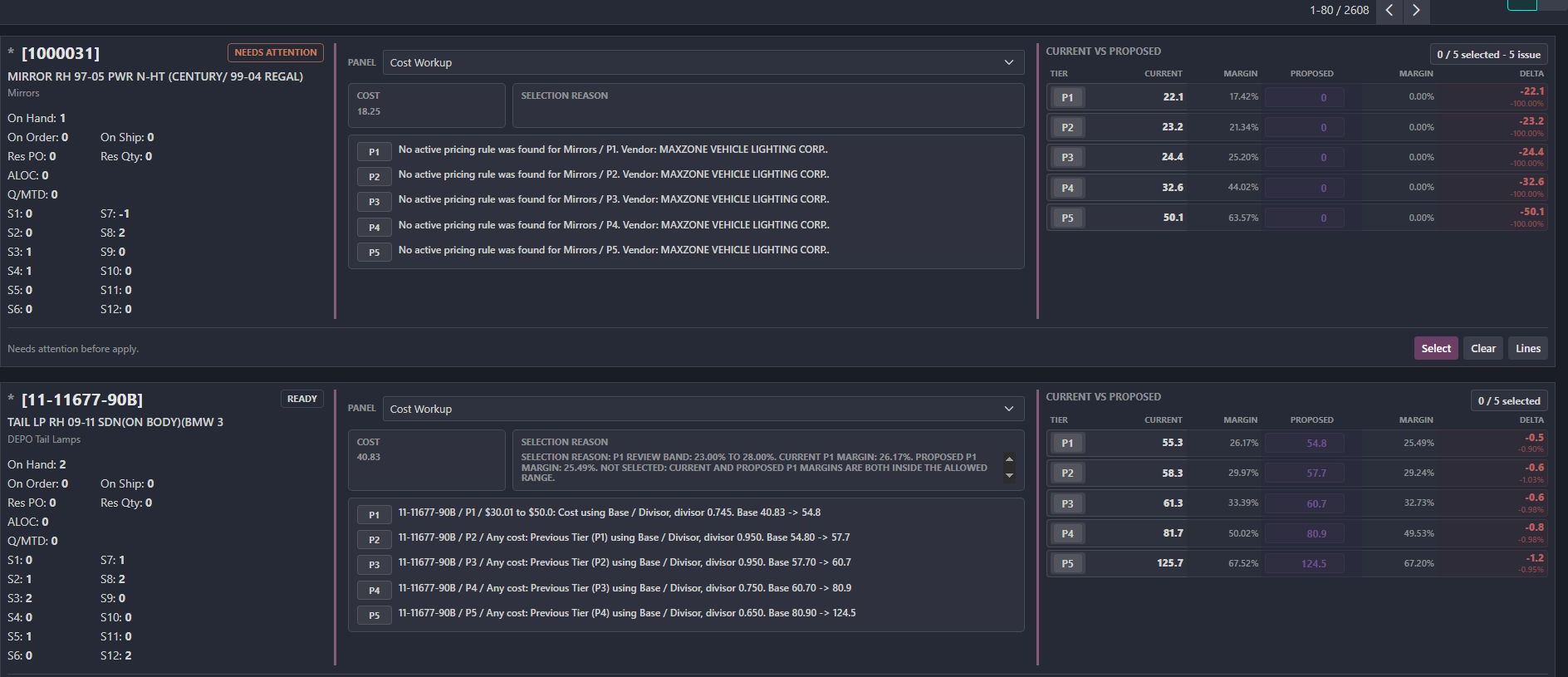
Continue from cost preparation into tier-price proposals and selection.
Supplier shipments and their relevant purchase lines gain one operational reference.
Grouped transfers, partial quantities, backorders, and kits are handled without losing container context.
Bills, duties, fees, currencies, and landed-cost rules are assembled against the received goods.
The team can see which containers have completed cost preparation and which products still need review.
Refined purchase-container line handling so the inbound source relationships remain usable for later work.
Dates identify recorded implementation changes, not claimed rollout dates or measured results. Reviewed revisions: d480960.
Physical arrival does not by itself establish that duties and landed costs are complete.
The form keeps charge categories and the customs-duty table in distinct review tabs.
The cost record is already posted. Its allocation can be inspected without implying that a later price review has been applied.
Existing records are shown as captured. Private identities are covered or outside the crop. No business records were changed for this collection. Implementation history supports behavior beyond the visible screen; a still image is not an end-to-end test or a measured productivity result.
Odoo purchasing, inventory and accounting, the Captivea container foundation, and existing import-fee/landed-cost modules provide the base. Pro-A-Motors extensions connect collaborative receiving, container readiness and downstream price review. The case shows that combined operating workflow.
Connects shipment expenses with the products whose landed cost they affect.
Keeps shipment charges and cost allocation connected for financial review.