Check the evidence
Open the product’s count lines and compare locations, rounds and movement. A shortage at one location may need investigation elsewhere.
Assign the work. Capture what is on the shelf. Investigate differences. Apply a reviewed stock decision—all inside Odoo.
Explore the actual module ↓Explore 8 real module views: the production review workspace and a populated staging scanner. Product codes, quantities and location context remain readable. Select a view or enlarge any screenshot to inspect the controls.
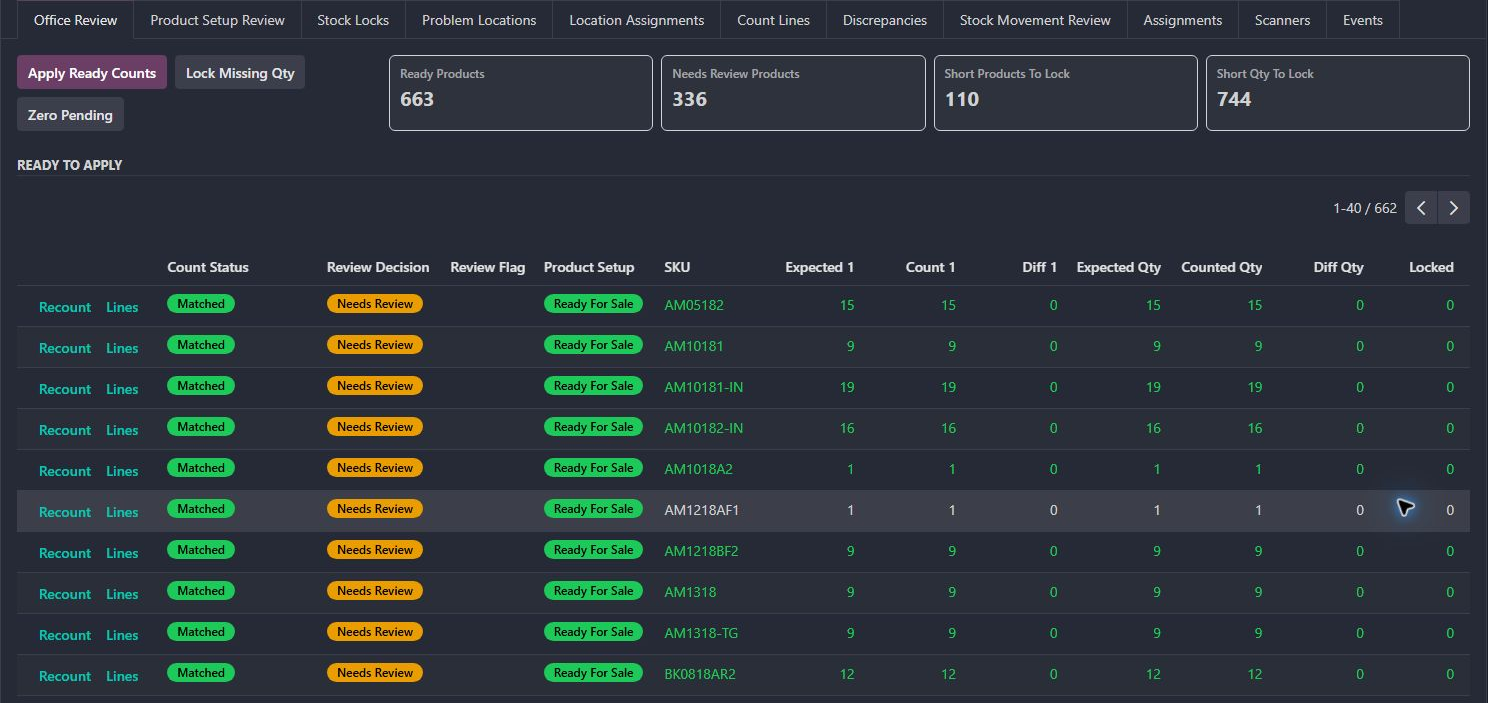
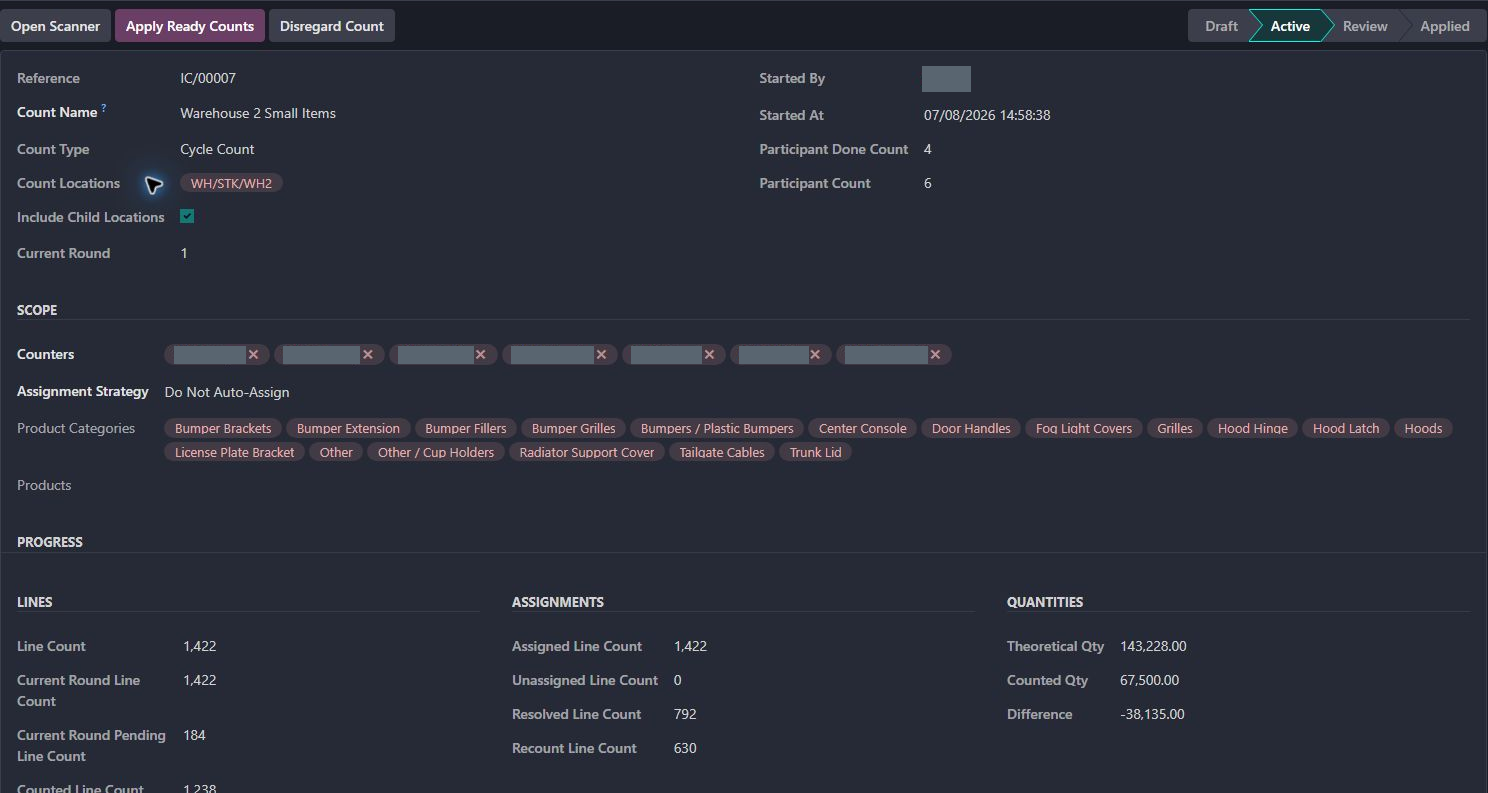
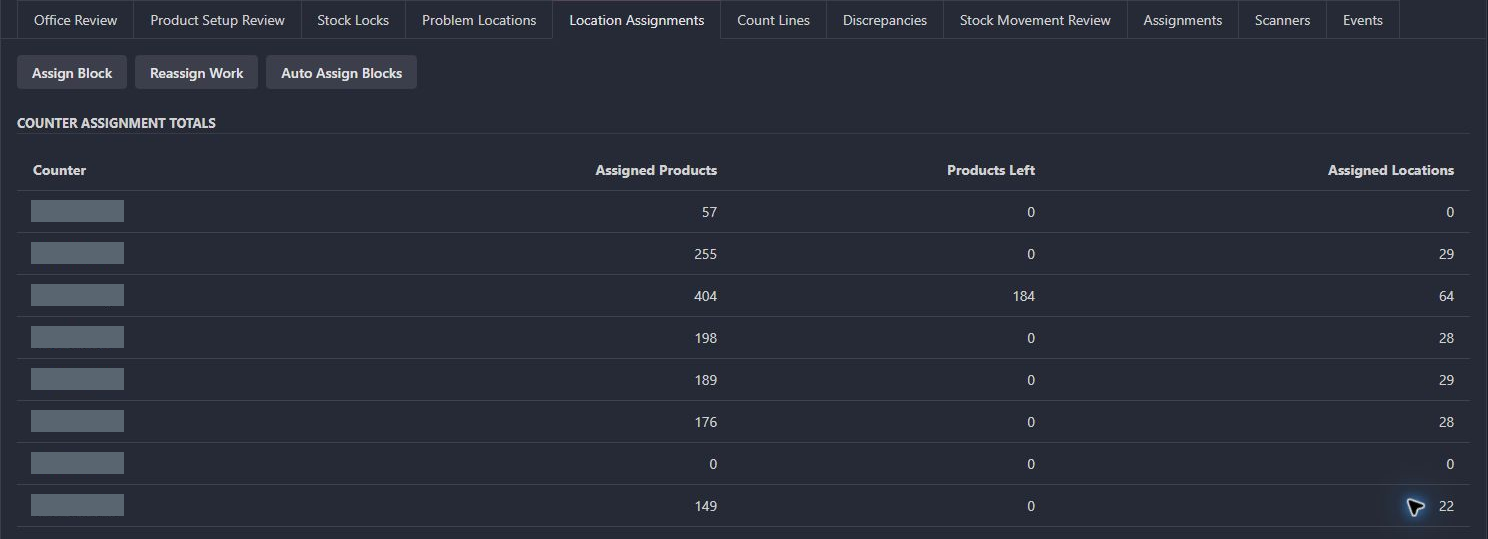
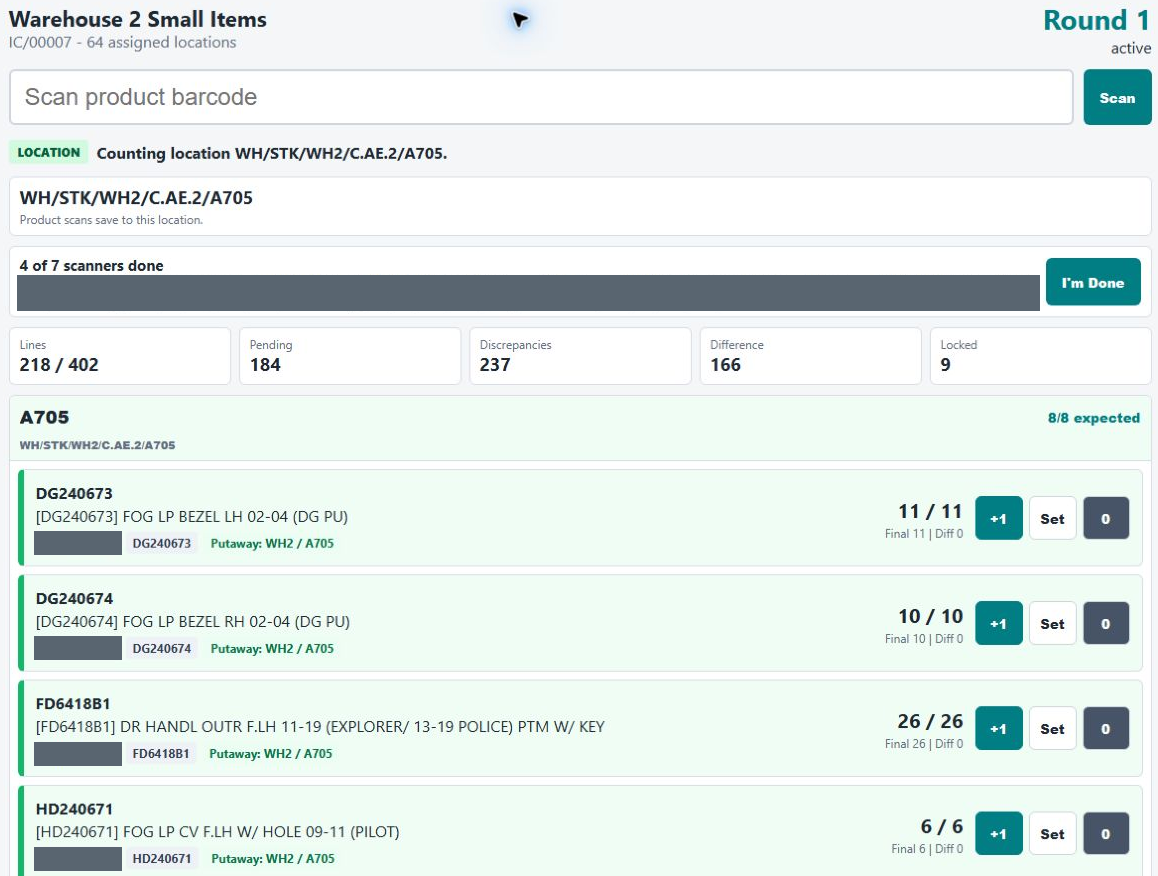
Office screens: Pro-A-Motors production. Scanner screen: Pro-A-Motors staging. Staff identities are covered. These are recorded observations, not a completed stock reconciliation.
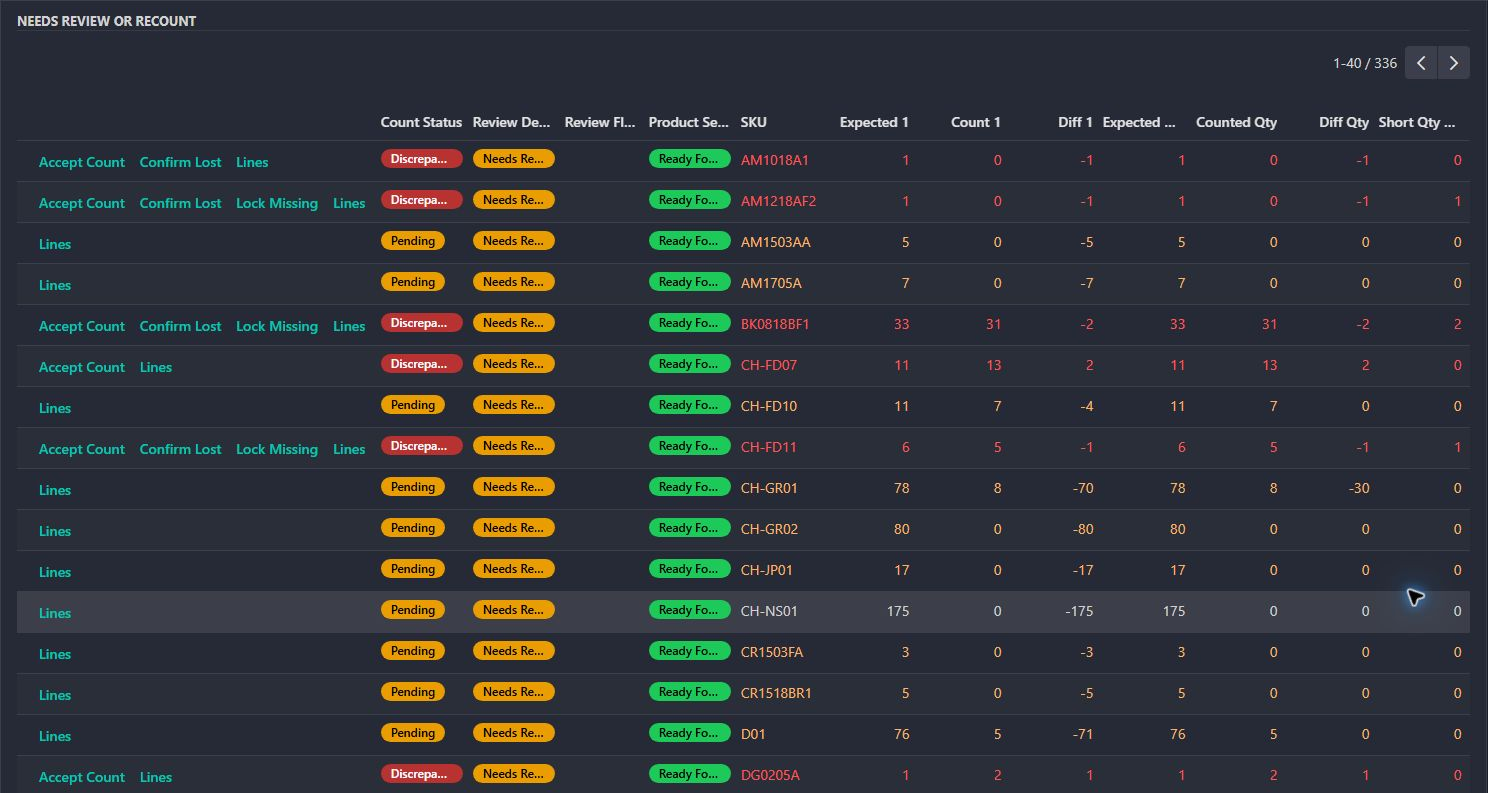
The review queue shows 33 expected and 31 counted for this product. The difference is visible alongside the decisions the reviewer can make.
Open the product’s count lines and compare locations, rounds and movement. A shortage at one location may need investigation elsewhere.
Depending on the evidence, request another count, accept the observation, confirm lost stock or protect the missing quantity with a lock.
The screenshot shows an unresolved review. It does not establish a loss or a final adjustment. Applying stock is a later, controlled action.
The count is one part of a larger control loop: assigning the work, recording what was observed, investigating movement and deciding which stock can be trusted.
Compare assigned products, remaining work and locations; rebalance the workload before closing the count.
The next handoff The next counter receives an explicit scope.
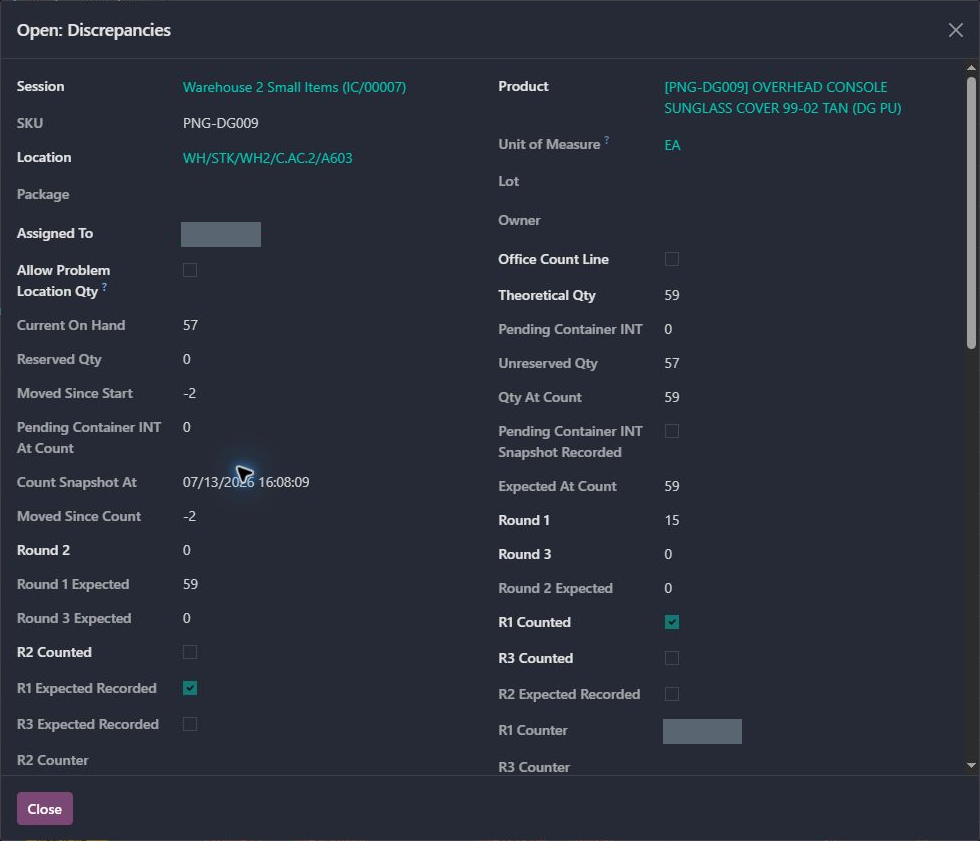
Open the count detail, inspect movement since counting and request another round where needed.
The next handoff The reviewer receives an observation with time and location context.
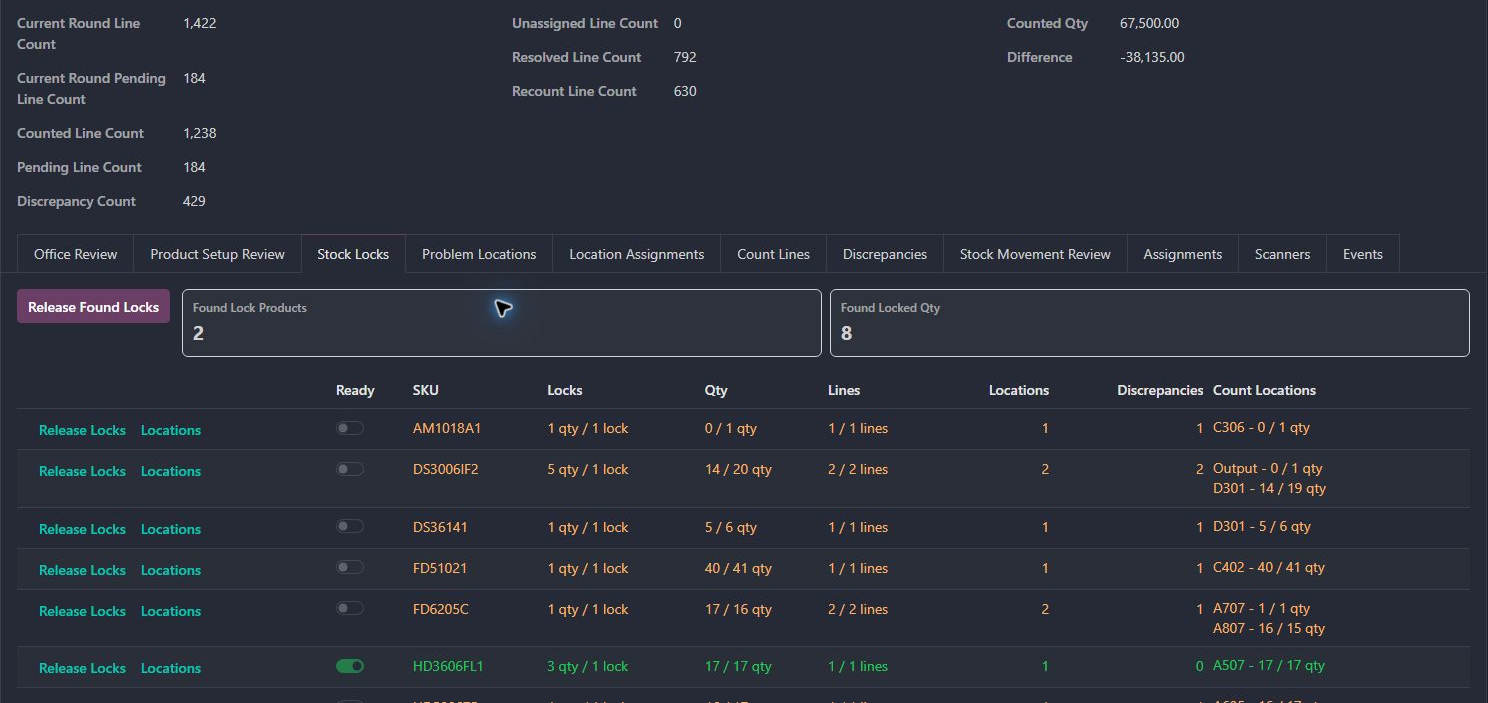
Use the review and stock-lock workflow to keep unresolved quantities visible and protected.
The next handoff Sales availability can reflect the held quantity.
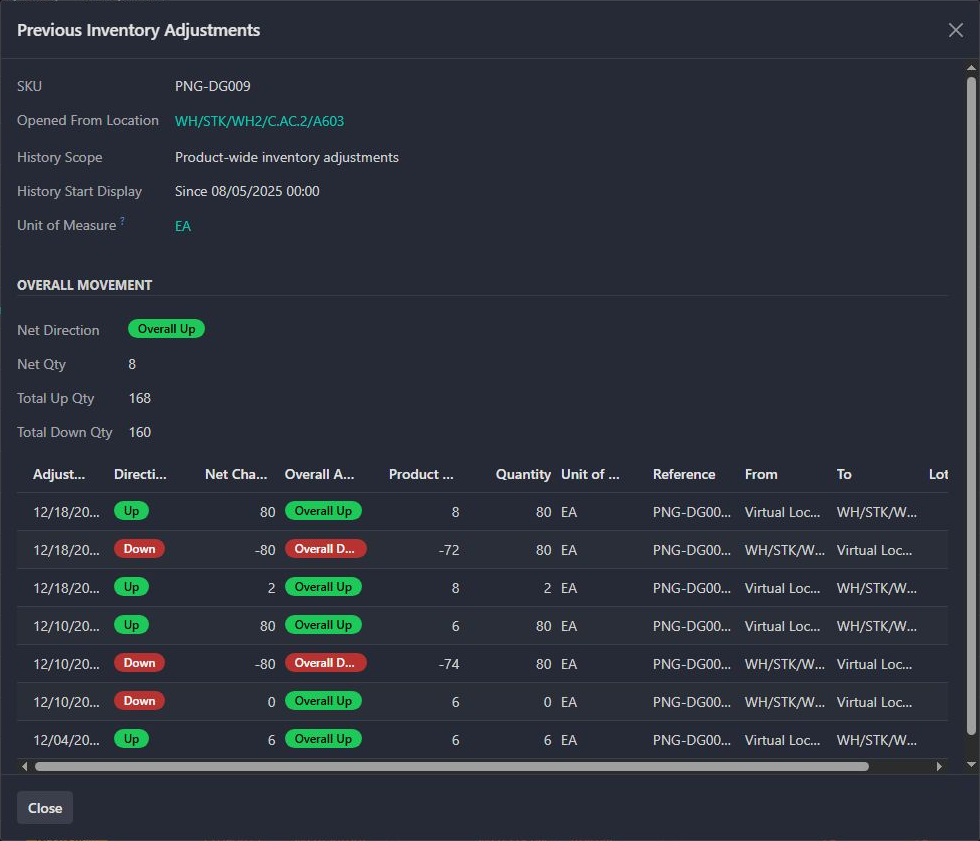
Follow the product’s adjustment history and its references across locations.
The next handoff The next investigation starts with the earlier decisions available.
These paths describe the implemented workflow. The captures show specific existing records; they do not demonstrate every branch being executed.
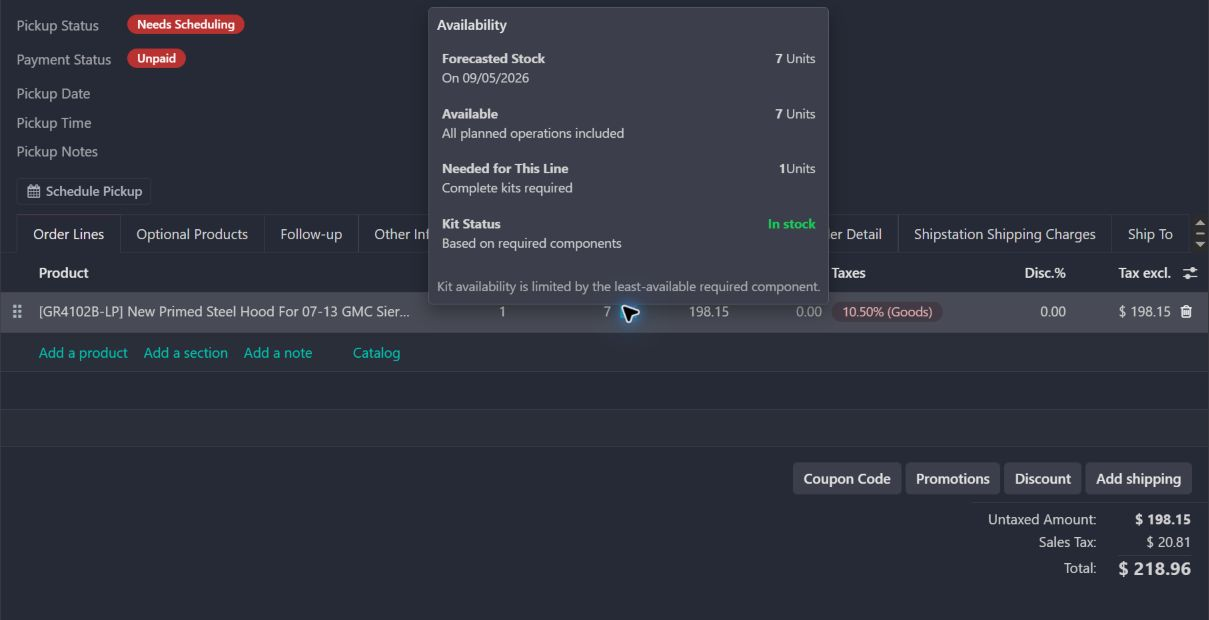
See how stock restrictions reach a sales-order availability decision.
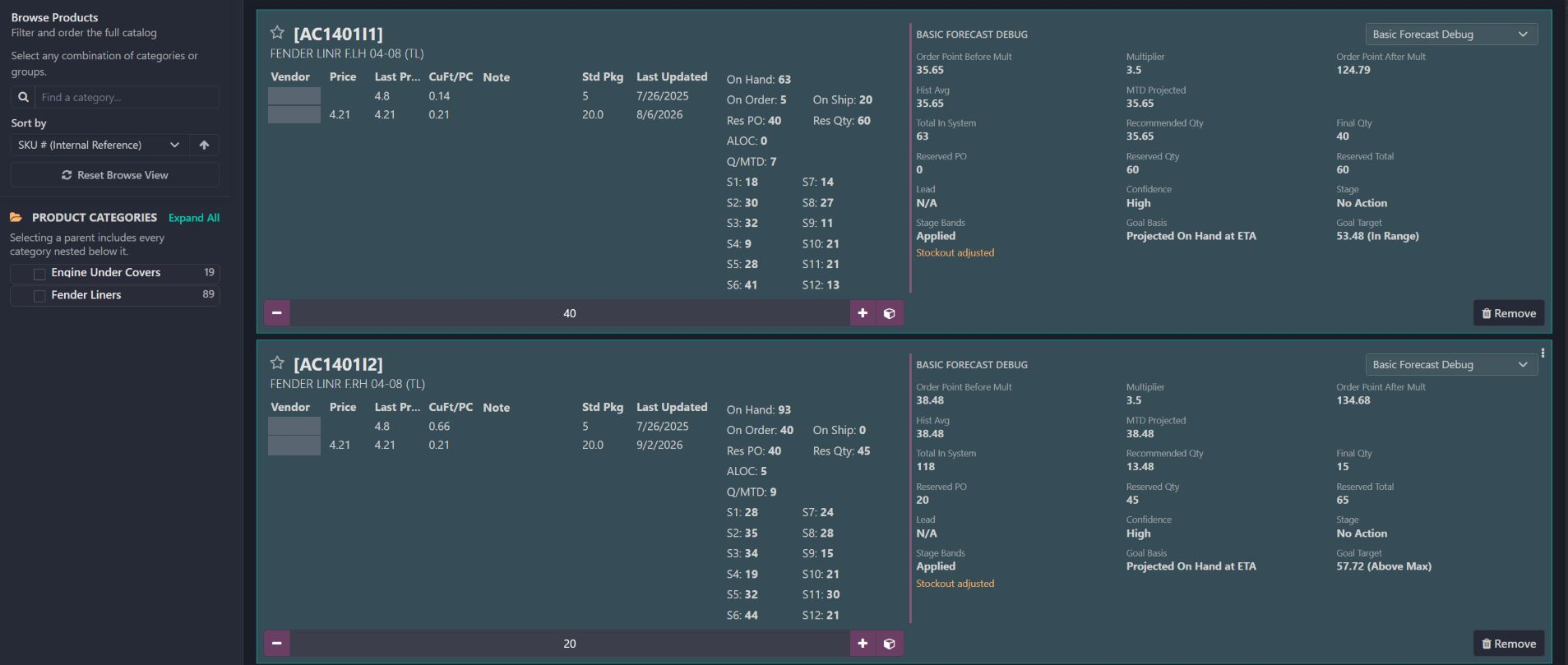
See the supply and demand context that buyers use alongside physical counts.
A dedicated barcode interface starts with a location scan, then accepts product scans. Counters can correct a quantity, explicitly count zero and mark their work done.
The workflow retains earlier round results and supports additional recount rounds. Reviewers can compare observations instead of losing the first count when someone counts again.
Product setup, unexpected locations, stock movement and active locks have their own review surfaces. A quantity match alone does not answer every stock question.
Authorized reviewers use Apply Ready Counts. The backend checks pending work, recount eligibility and product-setup decisions before applying eligible lines under an adjustment reference.
The views above show existing count records and the populated staging scanner. Additional-round and adjustment behavior is also verified against the module source. No product scans, count edits, recounts, stock-lock changes or stock adjustments were performed for this walkthrough.
A physical count crosses people, locations and time. Work has to be assigned, observations saved, stock movement explained and differences reviewed before the business relies on the result.
We built a connected workflow so the next person can inspect the evidence behind the number.
A line awaiting a count is different from a counter explicitly recording zero. Pending work remains part of the review gate.
The detail view shows 59 expected, 15 counted and −2 moved since that count. Keeping those values separate lets the system account for later stock movement.
The history view is product-wide, even when opened from one location. Reviewers can see earlier corrections elsewhere without mistaking them for this location’s count.
Inventory SKUs, quantities and warehouse location codes are retained for readability as requested. Staff names and the scanner participant roster are covered. Captures are real pixels from existing records; no values or controls were recreated.
Office views were captured from production. The populated scanner was captured in the user-provided staging environment using an existing assigned location. Selecting that location registered this scanner session; no product scans, count edits, recounts, stock-lock changes or stock adjustments were performed for the walkthrough.
Custom Pro-A-Motors modules extend Odoo Inventory and Barcode and connect to the purchasing and collaborative-scanning extensions.
Gives supervisors a review step between a physical count and the inventory adjustment.