The business problem
A vendor spreadsheet can contain part codes, package sizes, costs, cube and notes that have to return to the right supplier-product record. A generic record-edit timestamp does not identify an actual supplier-data refresh.
Keep supplier costs, packaging details and update dates connected to the purchase lines buyers are working on.
See the real screens ↓Explore 1 real view of this workflow. Select a task, show every screen, or enlarge an image to read the original controls.
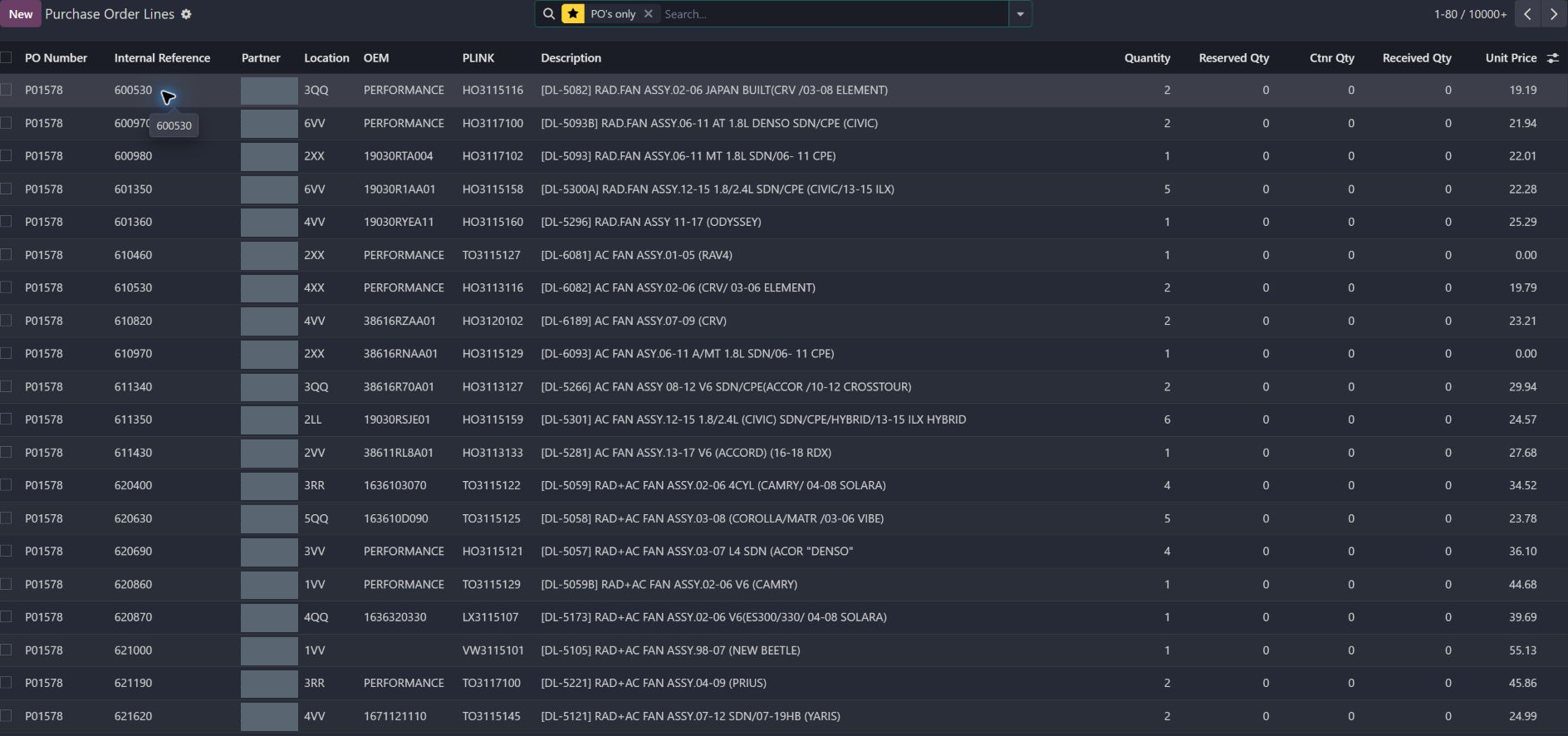
Actual Pro-A-Motors interface captures. Private identities and contact details are covered or outside the crop; screen data has not been replaced.
A vendor spreadsheet can contain part codes, package sizes, costs, cube and notes that have to return to the right supplier-product record. A generic record-edit timestamp does not identify an actual supplier-data refresh.
Supplier exchange supports structured purchase data and a timestamp that identifies the supplier refresh itself.
Buyers can review structured supplier information in the purchasing workflow and distinguish an import update from unrelated edits.
A buyer receives updated supplier costs and packaging details in a spreadsheet. The import keeps those changes connected to the purchase lines and records when the supplier details were refreshed.
The worksheet carries the product and purchasing references needed to match each update.
Review the source file and mappings before applying it to the supplier record.
The buyer has updated supplier data with a date that corresponds to the import event.
Start with the products and supplier details the buyer needs to update.
Include costs, quantities, packaging, product references and notes.
Keep supplier updates tied to the correct purchase lines and products.
Record an update date when supplier information is imported.
Refined supplier updates so the import writes its date and carries the location field back to the purchase line.
Dates identify recorded implementation changes, not claimed rollout dates or measured results. Reviewed revisions: c22e478.
The current importer skips unknown purchase-line IDs; it is not an all-or-nothing reconciliation report.
Review files before running the action because imported fields update supplier data.
The captured list and setup controls do not imply an actual export or import.
Existing records are shown as captured. Private identities are covered or outside the crop. No business records were changed for this collection. Implementation history supports behavior beyond the visible screen; a still image is not an end-to-end test or a measured productivity result.
Built on Captivea CAP modules and Odoo. This case describes the subsequent Pro-A-Motors extensions and refinements recorded in the reviewed repository; it does not attribute the original CAP implementation to Toro.
Connects supplier spreadsheet updates with the relevant purchase and product records.
Uses explicit record identifiers for the spreadsheet handoff.